5 Tips to Make Your Catalogs Stand Out
Print marketing isn’t dead. It has simply evolved. In 2026, catalogs remain a powerful way for brands to connect with their customers. From small local shops to online retailers, businesses still rely on catalogs to showcase products, tell stories, and strengthen brand identity.
Think about it: your favorite coffee brand, a nearby pet store, or that small furniture studio probably still uses a catalog in some form.
In this article, we will take a look at one of the key elements of print marketing - catalogs. We will share 5 essential tips for creating a successful catalog, whether digital catalog or print, with basic marketing and copywriting skills.
Recommended: Bring your catalog to life with Publuu
The fact that catalog marketing deals with a printed medium doesn't mean that it cannot perform well online. After all, digital marketing involves more than one type of channel. From a simple social media post to a flashy landing page - your catalog will have more than one chance to shine.
That's where Publuu comes in.
All you need to do is upload your catalog to our flipbook generator.
How to do that?
Just ask your designer to send you a PDF file version of your catalog. No matter what software they used, there’s always an option to export as PDF. Upload it to Publuu, and within minutes, your catalog becomes an interactive presentation ready to share online.
What will you get in return?
A professional, engaging catalog that reaches a wider audience. Every page in your Publuu flipbook comes alive with realistic page turns, clickable links, embedded videos, and responsive design that looks great on any device.
Publuu’s company presentation example
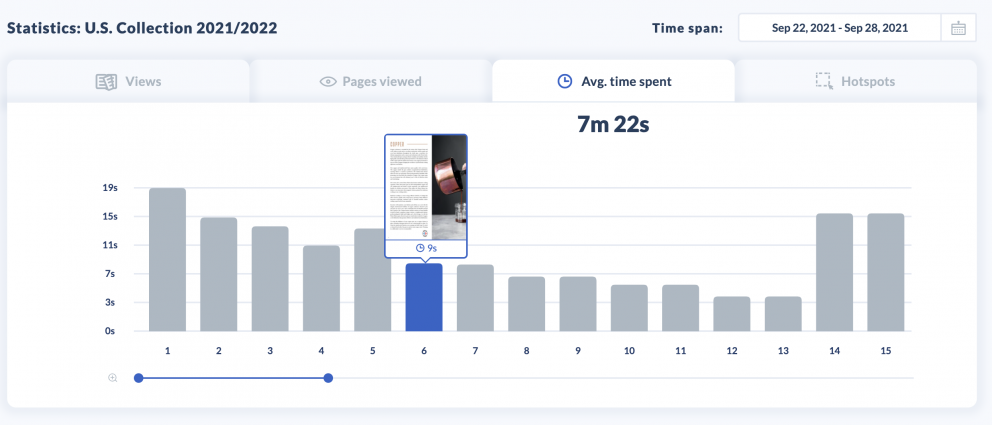
On top of that, You'll get the chance to experiment with your catalog and see what's working. With Publuu's PDF tracking feature, you'll see which pages attract attention - and fix those that don't do so well.
Curious? See how it works!
Start with buyer persona!

Assuming that you didn't get into catalog marketing head first, you are reading this article because you are planning on making a new catalog for your business. Great! You are probably sitting in front of a blank page, scratching your head and thinking "what should I do first?"
We've all been there.
First and foremost, before makign any kind of marketing content you need to ask yourself: who are my customers?
And if you think that you have already answered that question with something like: " young professionals aged 25-34, making more than 50k a year and living in Wisconsin" then I have a bad news for you: You don't know your customers.
It's a very common mistake, than can be easily fixed. Search online for "buyer persona template " or use one of the existing apps. Next, carefully fill in all the boxes. There will be questions about personal lives of your customers, their preferences. Their dreams. Their fears. You don't need to necessarily know all that - just write whatever you think would be realistic.
What's the point?
It is to describe what kind of people your customers are. Are they outgoing? Family orientated?
Your buyer persona will determine HOW will you communicate with them. What kind of products will your catalog show first. What kind of language will it use. Buyer persona is the very cornerstone of every marketing strategy.
Go beyond plain product photos

As we move into 2026, visuals still make or break your catalog, but simple product shots on a white background are no longer enough. Today’s customers expect emotion, context, and authenticity.
Instead of showing only what your product looks like, show what it feels like. Use lifestyle photography, short videos, or even 360° views to help people imagine using your product in real life. A bucket by the lake at sunrise or tires next to a vintage car – simple, creative ideas that instantly tell a story.
For digital catalogs, take it a step further. Add clickable hotspots, embedded videos, and links that guide readers directly to your products or website. Creativity and interactivity turn images into engagement, and engagement into sales.
Think about User Experience and how you can improve it

In digital marketing, user experience (UX) focuses on how easy it is to navigate a website or app, whether on desktop or mobile. A good UX makes people say the interface feels intuitive and pleasant to use.
But what about catalogs? They may seem like simple pages to flip through, yet there is plenty of room for improvement. In 2026, UX in catalogs means making it effortless for readers to find what they need and take action.
If your catalog’s goal is to attract customers to your store, make sure the address is easy to spot. Add a small map or a clear location note, such as “next to St. Peter’s Church, near the warehouse entrance.”
When your goal is to receive phone or online orders, place your contact number and business hours in a prominent place. Keep the interaction human, and train your team to talk naturally with customers instead of reading from a script.
A good catalog experience is about clarity, accessibility, and empathy. Make your customers feel that your brand values them as people, not just as transactions. If your catalog is digital, ensure it is responsive, loads quickly, and offers intuitive navigation. That is what modern UX is all about.
Test, test, test
There are many ways to design a catalog that sells, but until it actually brings customers, you can never be completely sure. The truth is that no one knows what will work best – even experienced marketers can only make educated guesses.
That is why testing is essential. Before printing or launching your catalog online, try out different versions of the cover, layout, and featured products. Show them to a few customers, share them in a small online campaign, and collect feedback.
For digital catalogs, it is even easier. Upload your catalog online and monitor how readers interact with it: which pages they spend time on, which products they click, and where they stop reading. Use this data to refine the next edition.

You can even do that on Facebook - convert your catalog into a flipbook and promote it with a 50$ budget.
Watch how many interactions it gets and what type of content attracts the most engagement.
To take it a step further, use A/B testing in your social media or ad campaigns. Compare two versions of your catalog with different images, prices, or calls to action and see which one performs better. Even small adjustments, such as moving a button or changing the order of products, can have a visible impact on results.
Keep improving one step at a time. The goal is not to create a “perfect” catalog, but a better one with each new version. Testing helps you understand what your audience truly responds to – and that knowledge will always pay off.
Conclusion on making your catalog stand out
Creating a catalog that stands out takes more than good design or catchy slogans. The key is to understand your audience, test different ideas, and keep improving over time.
In 2026, the most successful catalogs combine beautiful visuals with data-driven insights and smooth user experience. Whether you share them online or offline, focus on clarity, simplicity, and a personal touch – that is what truly connects with readers.
Remember, your catalog is more than a list of products. It is your brand’s story in motion, showing customers why they should be part of it.
You may be also interested in:
Catalog Design Ideas
Online Shopping Catalog vs Paper Catalog – Which One Works Best?