Marketing proposals: structure, examples and best practices
Want to gain more customers? The first step to always attract attention is to conduct a marketing campaign that will grab their attention at first sight. A perfect marketing offer for the first time with potential users. It is an action plan demonstrating how you can solve problems of potential customers and clearly explains why they should trust you.
In this guide, you'll learn how to create a marketing proposal from nothing - what to include there, how to write a simple and clear executive summary, how to publish it using a online flipbook creator and what separates the best proposals from the rest.
What is a marketing proposal?

A marketing proposal is a formal offer a company makes to a potential client. Its purpose is to explain to the client that your company's services are worth checking out.
A good marketing proposal typically contains four key elements:
⭐ Strategy - a specific idea and road map on how to implement it.
⭐ Pricing - service costs.
⭐ Estimated time - a general work plan.
⭐ Returns - what the potential results and benefits will be.
After reviewing the proposal, the client can request changes. The marketing proposal then becomes the guidelines that the entire marketing team ought to follow throughout the project.
This means that the proposal not only showcases what you can do - it sets the pace for the work and gets the client really excited.
Why presentation matters in marketing proposals?
Most people say that content is what matters most. And that’s true - to a point. But in reality, presentation influences how that content is received. A proposal can include a solid strategy and realistic projections, yet still feel underwhelming if it looks rushed or generic. Clients may not say it directly, but they notice these things.
Sometimes the format shapes the first impression before anyone reads a single word.
The problem with standard PDFs
Many companies still publish static proposals in PDF format. This is, of course, the norm - everyone does it. But that's precisely the problem: if you do this, you won't stand out from the crowd. Keep in mind that your client may have hundreds of different proposals on their desk... So how will they choose you?
This is why interactive flipbooks are becoming a stronger alternative nowadays. Instead of sending a flat file, you can transform your proposal into an engaging, browser-based publication. Thanks to the realistic page-turn effect, and interactive elements, your proposal will stick in the reader's memory long after they've closed the tab. Below you can check an example of how a business proposal can be presented.
Publuu’s business proposal example
The power of visual storytelling
A modern digital marketing proposal, or any other type of document, serves not only to inform but also to interest your customers. It should rely on visual storytelling - the art of telling a story through images, data, and narrative structure. It's not enough to list what your company can do; you need to provide context. Tell a story. People remember stories far better than dry, boring bullet points.
Instead of just showing charts, company advertisements, or portfolio slides (which the customer can easily check these days using a smartphone at any time) tell a success story:
- Don't just show bars - describe how redesigning the product page increased the customer's revenue by 50%.
- Don't just paste data - explain how analyzing user behavior led to a navigation overhaul that doubled traffic.
- Don't just list services - walk the reader through a real campaign from problem to solution and result.
Yes - show the numbers, but let the story explain why those numbers matter.
Key elements of a marketing proposal
1. Executive summary
The executive summary is where your proposal really begins. The summary is the first thing your client reads, so it needs to hook them immediately. Today's decision-makers are very busy, so once you have prepared the copy for offer, summarize it in one or two paragraphs. Spark their interest, make them want to keep reading, and so on.
2. Understanding the client’s situation

Show that you really understand the customer's situation. Based on previous conversations and analysis of their needs, clearly describe:
- Problem - What challenges does the customer face in their industry?
- Impact - How do these challenges affect the company's daily operations and results?
Let me put it this way – before you start showing your competence, you must first attract the customer and build trust. The customer sees that you are not offering a ready-made solution that you have for every Tom, Bob, and Harry but that you are really listening to their problems and want to help.
3. Strategic plan
This is the heart of any good proposal. Whether you're putting together a social media marketing proposal or any other type of offer. Here's where you show your work:
✔️ Present your strategy in the form of clear, specific steps.
✔️ Explain the benefits for the client at each step.
✔️ Propose a set of services that will help achieve the desired goals.
And this is where storytelling comes in handy. Don't just say "we'll increase book sales" - take the reader through the entire campaign, from social media ads to online sales to promotions at various events and conventions
4. Schedule, budget, and proof of results
Schedule
For longer projects, divide the work into stages. Describe what will be done in each phase and when.
I can write, for example, "Our advertising campaign will run for two months on social media, and at the same time, the team will distribute flyers and show samples at industry events throughout the season (six months)".
This way, my client will know what is going on and can confirm each stage.
Budget
Explain the costs clearly and present everything nicely in a table. Explain what each item means. After all, no one wants to be surprised, right? It's also a good idea to leave a 10% margin - show that you are thinking about the future.
Proof of results
Nothing builds trust faster than proven success. And by this I mean examples, case studies, results (easily verifiable), or testimonials from satisfied customers. It's important to have references.
Call to action
Don't leave the client guessing about what to do next. End your proposal with a clear, simple next step, like contacting you or visiting your website.
The simpler and clearer this step is, the more likely the customer is to take it. Include a direct link to your calendar, a phone number, or social media to make thing easier for them.
🎯 You can also check: Business proposals – complete guide
How to structure a marketing proposal?

Here’s a clear breakdown of the key sections most marketing and business proposals include. Different projects may require slight adjustments, but this structure works well in practice:
Title page
Your opening page should include the project title, a short description, your name and position, your company name, and the date. I mean, you shouldn't judge a book by its cover but people certainly will.
Table of contents
For longer offers, like a complex social media marketing proposal, you have to include a table of contents to make navigation easy. Thanks to this table of contents the customer can quickly find the section they are interested in. Publuu allows you to add interactive elements such as links, so the client can click a chapter title and jump immediately to that page.
Summary
The summary is your chance to make a good first impression. It should be simple enough, and include these elements:
🔹 Personalization - address the customer directly by name or company name.
🔹 Value proposition - describe in one or two sentences how your company will help the customer achieve their goals.
🔹 Content preview - briefly outline what to expect in the document.
🔹 Proof of credibility - mention previous successes with similar companies.
Solution
This is the most important substantive part of the offer. Here's what to include:
🔹 A clear description of the challenges the client is currently facing and why they matter.
🔹 Your proposed way of solving those issues, including the logic behind your approach.
🔹 A detailed outline of what will be included in the project, so both sides understand the scope from the start.

Investment
Be clear about the financial side of the project. Instead of just listing numbers, explain how the costs are structured. You can divide the budget by service or by project phase, depending on what makes it easier to understand. It is also important to specify payment terms and deadlines. A short explanation of what each cost covers helps avoid misunderstandings and shows that the pricing has been well planned.
Project schedule
Divide the project into very clear phases with start and end dates. This gives client a sense of control over project.
Project team
Shortly introduce the people who will actually do the work. List their roles on the marketing team and explain their relevant experience. Putting real faces behind the proposal builds trust and makes the whole thing feel more human, since we all want to know who were working with.
Agreement details
End with the key terms and mutual responsibilities, along with space for signatures if needed. Keep it straightforward. The detailed legal contract can always follow later. At this stage, clarity matters more than formal language.
The delivery method is just as crucial as the content.
Email attachments are still common, but they come with a baggage. A 20 MB PDF can bounce, land in spam, or simply never open properly on mobile. That's not the impression you want to leave.
Video presentations are a great way to stand out. You can record yourself walking through the offer and host it on YouTube or Vimeo. The downside? Clients can't easily copy information from a video.
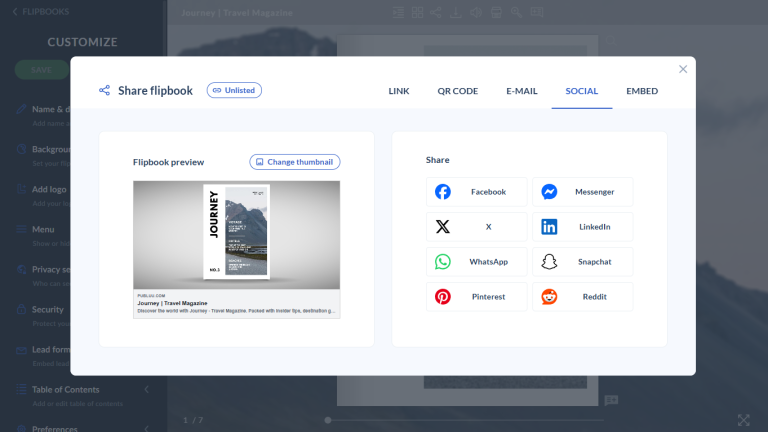
However, the best method to consider - is using a tool like Publuu, which allows you generate a direct link to your proposal. Here's why it's the preferred way to share documents:
🔥 Instant access - The client clicks the link and the proposal opens in their browser, on any device, no download needed.
🔥 Easy updates - Spot a typo after sending? Fix it in the flipbook without changing the link. The client always sees the latest version.
🔥 Analytics - See whether the client opened the proposal, how long they spent on each page, and which links they clicked. This tells you a lot before you even pick up the phone.
🔥 Security - Password-protect your proposal so only the right person sees your pricing and strategy.
Marketing proposal examples
Interactive marketing proposal made with Publuu
This digital proposal shows how to bring your document to life with page-turning effects and embedded media. Use it as inspiration for structure and design.
Publuu’s marketing proposal example
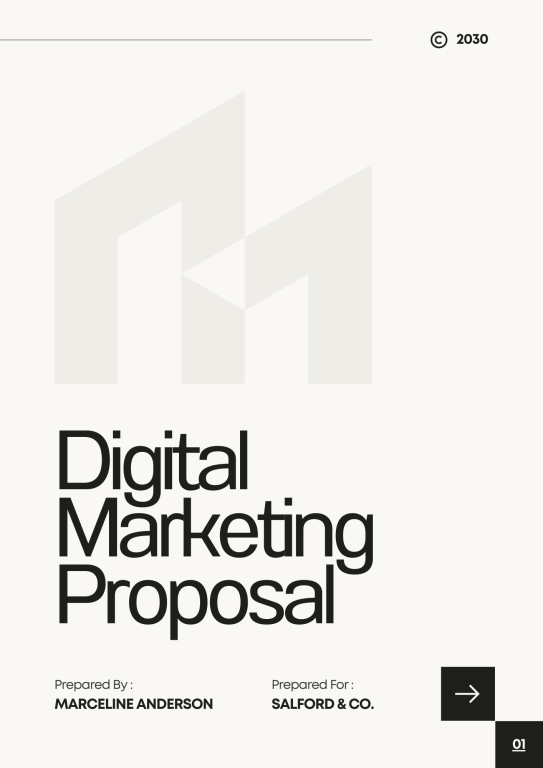
Digital marketing proposal
This simple template relies on a minimalist aesthetic, leaving plenty of white space for your logo and key message. Perfect if you believe less is more.
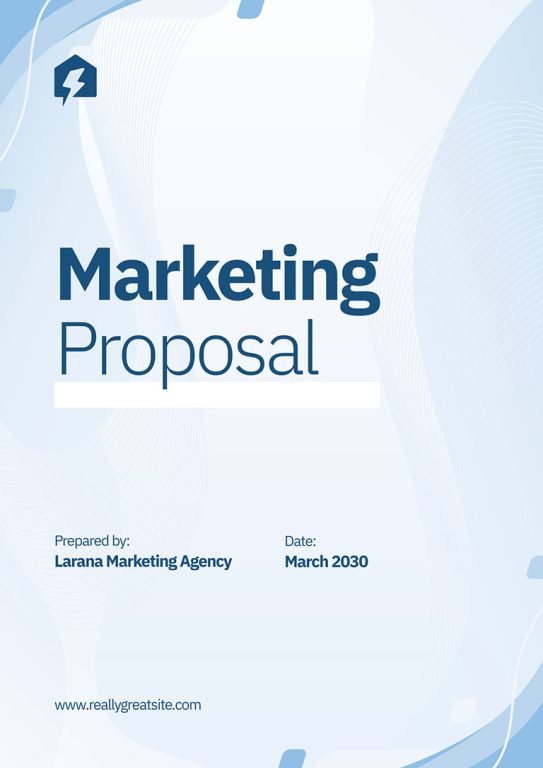
Canva marketing proposal
This blue design is incredibly versatile. It can suit all sorts of businesses, from agencies to freelancers.
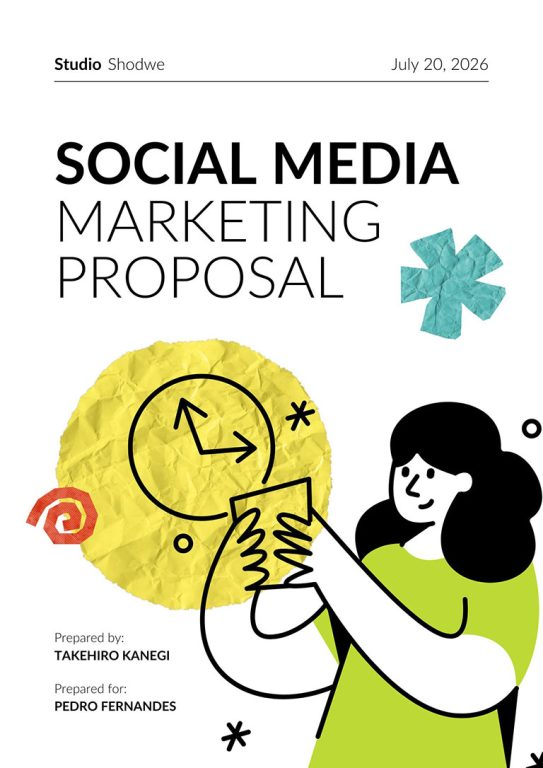
Social media marketing proposal
Playful and engaging. The cartoon aesthetic works great for a social media marketing proposal where creativity is key.
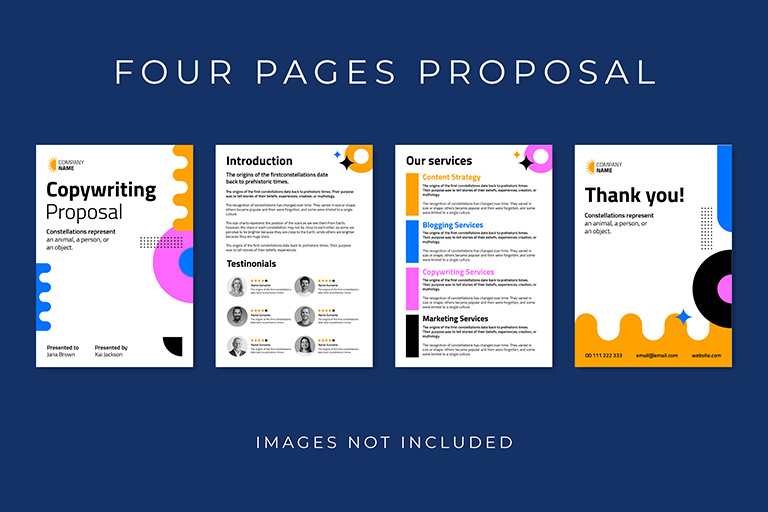
Copywriting proposal
Bold colors and patterns. This design is perfect for copywriters or anyone creating a marketing plan proposal who wants to make a splash.
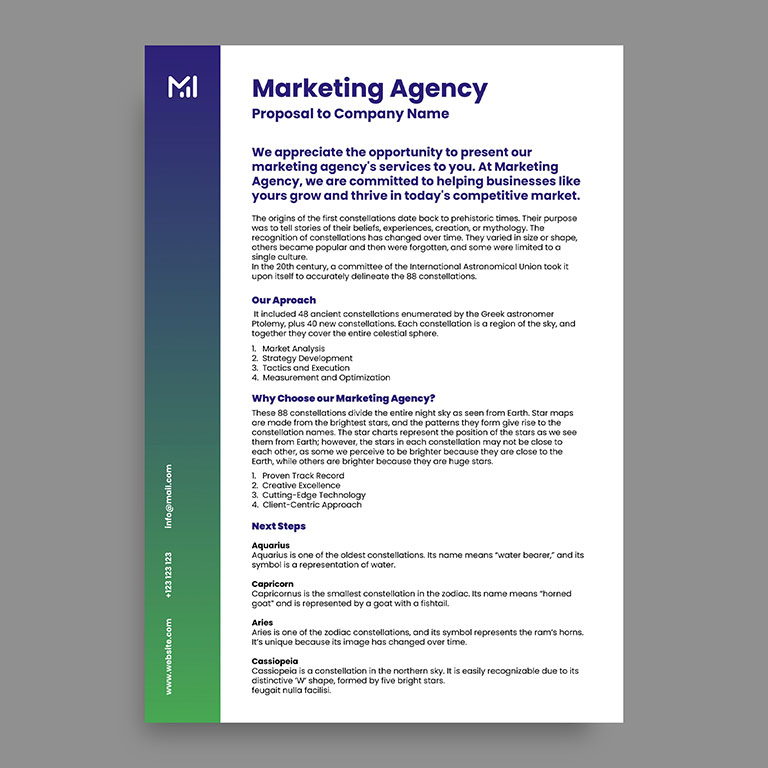
Marketing agency proposal
The simple gradient helps your offer stand out from the crowd in a sea of plain text documents.
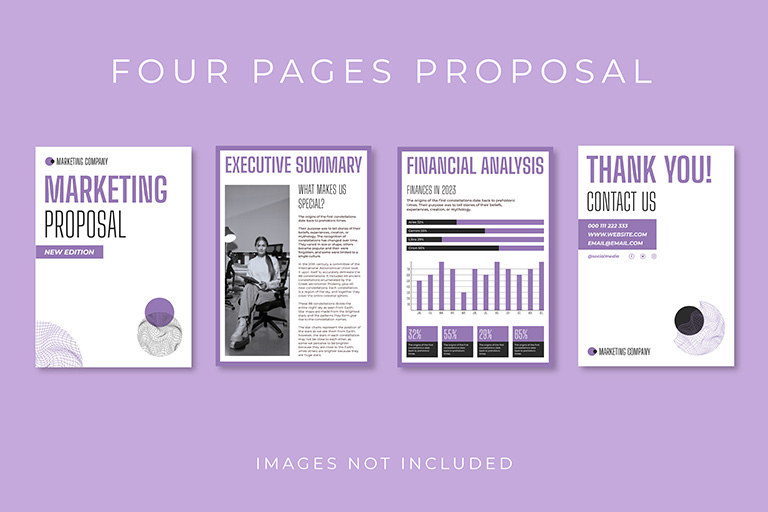
Marketing company proposal
The warm mauve tones of this template strike a nice balance between professional and approachable.
Marketing proposal best practices vs. common mistakes
Understanding what’s right is only part of the challenge. You still need to work hard to avoid common mistakes such as below.
Best practices | Common mistakes |
Personalize everything. Use the client's name, logo, and refer to specific problems they might have. | Copy-pasting templates. Leaving in "[Client Name]" or referencing the wrong industry destroys trust immediately. |
Focus on benefits, "This will increase your leads by 20%". | Focusing on features, "We will write 3 blog posts a week". (So what? Why does that help?) |
Keep it visual. Use white space, bullet points, and high-quality images. | Walls of text. Long paragraphs scare clients away. They won't read it. |
Include a clear CTA. Tell them exactly how to sign up. | Unclear endings. Ending with "Let us know what you think" leaves the ball in their court indefinitely. |
Use interactive formats like flipbooks with tracking and videos. | Sending heavy attachments. Large files clog inboxes and are hard to view on mobile. |
Use Publuu to take care of interactivity and strong visual component - and always double-check your document after you convert it to PDF or flipbook later.
FAQ about marketing proposals
How do you write a winning marketing proposal?
Put 80% of your focus on the client and 20% on yourself. Dig deep into their pain points and build your solution around solving them. Use persuasive copy, clear visuals, and solid proof like case studies, numbers, results. Then make it as easy as possible to say yes.
How long should a marketing proposal be?
Quality beats quantity every time. Most proposals are somewhere between 5 and 15 pages, so basically they're long enough to cover the strategy and key terms, but also short enough to keep their attention. For longer documents, a tight executive summary is a must! I've seen American executives trying to wade through a 16-page booklet and quitting midway through.
What makes a marketing proposal successful?
A winning proposal is clear, fairly priced, and builds trust from page one. If the client reads your influencer marketing proposal and thinks, "These people actually get me" - you're halfway to a signed deal with the influencer. The rest comes down to a transparent budget and a timeline that feels achievable.
What is the best format for marketing proposals?
PDF used to be the gold standard, but today the best format is a web-based interactive flipbook. It looks great on every device, supports embedded video and audio, requires no download, and crucially - gives you real analytics on how the client is reading it. That's a serious edge.
You may also be interested in:
How to present a business proposal?
Sponsorship proposal that wins: tips, examples, and templates
How to write an effective value proposition: examples and tactics