What is a media kit? Creation guide, formats and best practices
A media kit is the resume or CV of your brand, designed to make an impression on journalists, influencers, and potential partners.
We’ll walk you through the process of putting your media kit together, from deciding what to include to choosing how to share it. You’ll also learn how to turn a PDF to flipbook if you want to publish it in a more interactive digital format.
What is a media kit?
A media kit, sometimes called a press kit, is basically a place where you gather the most important information about your brand. It’s there to make life easier for reporters, bloggers, and anyone else who might want to write about your company. In simple terms, it brings everything together. Your logo, a short description of what you do, contact details, a few key numbers, maybe product photos or brand guidelines. Instead of digging through your website or emailing back and forth, people can find what they need straight away.
And it’s not only for the press. Investors, partners, or collaborators might look at it too. If someone needs your logo or wants to double-check how your brand name should be written, the media kit is usually the first place they’ll check.
Years ago, companies would send printed folders or attach heavy PDF files to emails. Now it’s much more common to share a link. Media kits often live online as press pages, brochures, or shared folders. Below you will find an example of a media kit created as an interactive flipbook.
Publuu’s media kit example
What should a media kit include?
A good media kit starts with the basics. Make it easy to contact you by adding a current email address and, if needed, a phone number, website link, and social media profiles.
It should also explain who you are. A short "About us" section with a clear description of your company and what you offer is usually enough. Readers don’t need a long company history. They just need context. Visual materials matter just as much. Include your logo in usable formats, product photos, and graphics that can be published without extra editing. It also helps to add a few key numbers or short examples that show your brand is active and trusted.
Brief bios and photos of founders or team members can be useful, especially if interviews are part of the conversation. And make sure to include simple brand guidelines so others know how to use your name, visuals, and tone correctly.
Most of these materials probably already exist. The real task is putting them in one place and keeping them up to date.
📊 Industry insight: News consumption keeps moving toward digital platforms, as noted in the Digital News Report 2025 by the Reuters Institute. That shift makes accessible, easy-to-share press materials more important than ever.
How to make a media kit (step by step)
Creating a media kit doesn’t have to be complicated. Below we present a simple way to approach it.
Prepare and gather materials
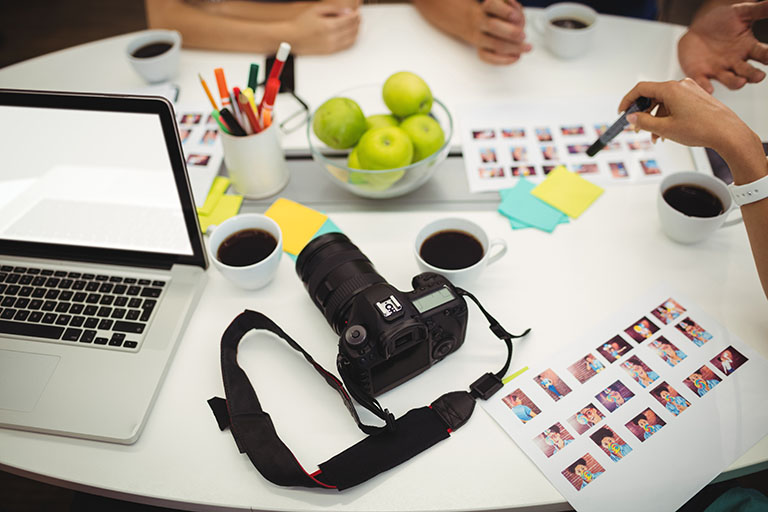
Before you start designing anything, just collect what you already have. Most companies are surprised that a lot of the content is ready somewhere in their folders.
You’ll probably need a short company description, your mission, and a few details about the people behind the brand. It’s also worth checking whether your numbers and achievements are still up to date. This is often the moment when you realize something hasn’t been updated in years.
Don’t forget the practical files. Make sure you have your logo in a usable format, a few good photos, and clear product descriptions. It’s much easier to build the kit once everything sits in one place.
Craft the company story
Now take a step back and think about how you want to present your company. Keep it simple. Explain what you do, who you help, and why your business exists in the first place. There’s no need to overcomplicate it.
If interviews might be part of the process, add short bios of founders or key team members. Media outlets often look for a person they can quote, not just a brand name.
Select and customize the format
Once your content is ready, think about how you want to present it. Some companies stick with a simple PDF, others prefer a press page or an interactive flipbook.
Whatever you choose, keep it consistent with your visual identity. Use the same colors, fonts, and logo versions you use elsewhere. If you go for a more interactive option, it’s worth checking whether you can add links, extra materials, or simple contact options.
Publish in a visible, accessible location
When everything is ready, time to publish it. Add your media kit to your website, keep the link handy when introducing your company, and make sure it’s easy to share. The simpler it is to access, the more likely it will actually be used.
If you’re using a hosted platform, updating the file without changing the link can save you time later.
Media kit format examples
There isn’t one "correct" format for a media kit. The right choice depends on how you plan to share it and how often you expect to update it.
Publuu digital flipbook (recommended)
An interactive flipbook feels more dynamic than a static PDF. It keeps the layout of a traditional document but adds clickable links, videos, and other elements that work well online.
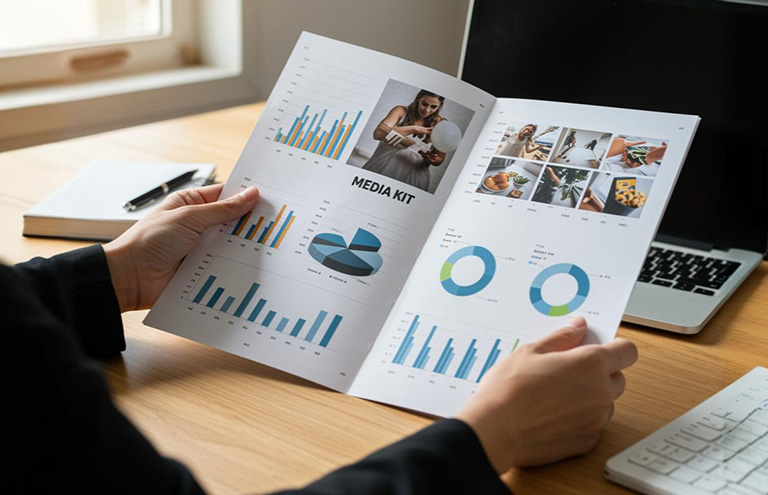
This format can also offer enhanced engagement insights, such as average time spent on each page, views and link clicks. This makes it easier to understand how your media kit is being used. Below is an example of a media kit created in Canva and shared through our integration.
Publuu’s media kit example
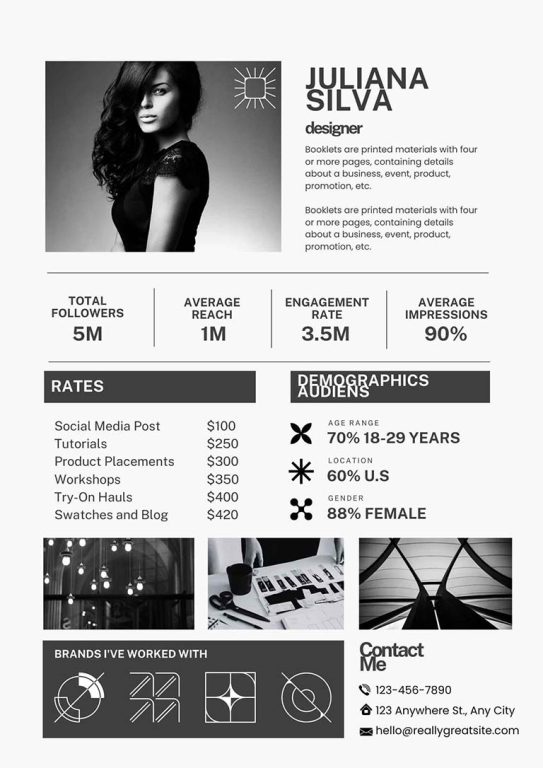
One-page media kit
Some brands prefer to keep things short. A one-page media kit, usually shared as a simple PDF or image file, highlights only the most important details.
It works well for quick introductions or social media messages. The trade-off is that you’ll need to link to additional resources if someone wants more in-depth information.
Dedicated press page
A press page lives directly on your website. It can include downloadable assets, company information, and media contact details.
This option is easy to access and can support SEO. However, it often requires regular updates and, in some cases, technical support to maintain.
PDF document
The classic PDF is still widely used. It’s easy to create and simple to send as an attachment.
That said, updating a PDF means resending it, and large files can be inconvenient to share. It’s also less flexible on mobile devices.
Cloud folder
Some companies share a folder with raw files such as logos, product images, and videos. This approach is practical for large assets, but it lacks structure and storytelling. On its own, a folder rarely explains the bigger picture of your brand.
Video media kit
Instead of a written document, you can create a short video that introduces your brand, products, and mission. This can be engaging and memorable, especially in industries like fashion or gaming. However, journalists often need text they can reference or quote, so video usually works best as a supplement rather than a replacement.
Physical media kit
In some industries, especially those built around tangible products, physical kits still exist. These might include printed materials, samples, or branded packaging.
They can make a strong impression, particularly at events. The obvious downside is cost and logistics.
Benefits of using a media kit
1. Control over image and brand protection
A press kit is created so you can control what others write about you.
- Up-to-date information: It ensures journalists use your current logo, correct statistics, and updated messaging. For example, if you rebranded two years ago, your press kit should include the new logo, not the old one.
- Avoiding misinformation: An official press kit helps people use the correct materials instead of outdated or fake content. This is especially important today, when AI-generated content and misinformation are common.
- Consistency: When everyone uses the same approved materials, your brand looks professional and consistent across articles, videos, and social media.
2. Making the media’s job easier (higher chance of publication)
Journalists are busy. They often work under tight deadlines and don’t have time to search for missing details. If you give them clear and organized materials, they are more likely to use them.
- Ready-made assets: Instead of searching for information, reporters can quickly find your photos, key facts, and background details in one place.
- Speed: The faster they can access what they need, the easier it is to include your brand in an article.
3. Saving your own time
A media kit saves your time. Think about how often you’ve sent the same logo or answered the same question.
- Fewer repeated emails: You don’t have to answer the same questions again and again or send files separately to different people. Most of us have done that at least once.
- Simple sharing: Instead of preparing new materials for each request, you can send one link with everything included.
4. Building credibility and professionalism
A well-prepared media kit shows that you take your brand seriously. People notice when things are organized.
- Strong first impression: When your information is clear and your visuals are consistent, your company looks more professional. It also shows attention to the details.
- Attracting investors: If partners or investors can quickly understand what you do and see the key numbers, it’s easier for them to decide if they want to work with you.
Media kit best practices
Creating a media kit is only the first step. The real value comes from keeping it updated and practical. Here are a few simple rules that make a big difference:
✔️ Keep it up to date - this is the most important point, outdated kit is useless.
- Data and stats: Regularly refresh your social media numbers and key company milestones.
- Image: Use photos that show what you look like now, not five years ago.
- Language: Avoid seasonal slang or pop-culture references so the text doesn’t sound "dated" after a few months.
✔️ Be specific and to the point - your kit is a handbook and quick cheat sheet, not an encyclopedia.
- Structure: Use short text blocks, bullet points, and clear subheadings.
- Keep it focused: Whether you create a short PDF summary or a more detailed digital version, avoid unnecessary sections. Every page should serve a clear purpose.
- Selection: Remove unnecessary information. Keep only what clearly builds your value.
✔️ Learn from competitors and respond - you don’t need to reinvent the wheel.
- Analysis: Review the kits of brands you admire. Try to point out what they do well and what they’re missing.
- FAQ section: If you often get the same questions, add a Q&A section to your kit. It's very practical nowadays.
✔️ Match the distribution format to the occasion - choose how you share it depending on where you are and who you’re talking to.
- Interactive flipbook: A practical everyday option that’s easy to access and share at any time.
- Email: When reaching out to a potential partner, include the kit as a flipbook link.
- Events (trade shows): Physical materials can work well here, but always include a QR code linking to the digital version.
Media kit FAQ
What is an influencer media kit?
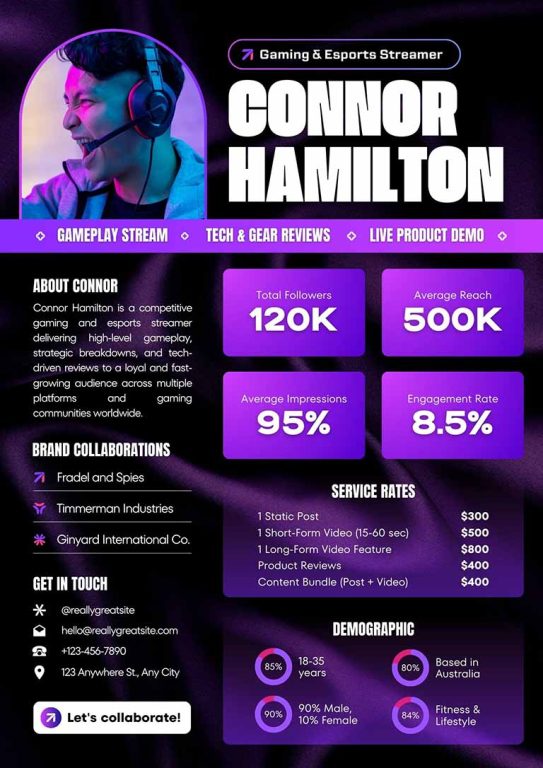
While a brand media kit focuses on company history and products for the press, an influencer media kit is like a creator's resume for brands and sponsors. Influencers create it to show audience demographics, engagement rates, follower counts, past collaborations, and pricing. The goal is to prove they can sell a brand's product to a specific audience.
Is a media kit the same as a portfolio?
No, though they're related. A portfolio shows samples of your work (articles, designs, photos) to demonstrate your skills. A media kit describes your brand identity, facts, figures, and contact details. A creative professional might link to their portfolio inside their media kit, but they serve different purposes.
Is a media kit necessary?
Technically, you can operate without one, but practically, it's essential. Without a media kit, you look unprepared when a journalist or investor asks for information. Having one ready shows professionalism, saves time, and significantly increases your chances of getting press coverage because you make the writer's job easier.
Final thoughts on media kits
A media kit is one of the most valuable tools for your brand. It saves time, controls your image, and makes it easier for others to share your story. Whether you're a startup or an established company, having a well-organized, up-to-date media kit positions you as professional and ready for opportunities.
You may also be interested in:
What is a brand kit and how to create it
Building a powerful brand identity
What is a brandbook? The complete guide