Sponsorship proposal that wins: tips, examples, and templates
Got an idea for a community event - like a charity run, music festival, or youth sports team? The right sponsor can help make it happen while gaining exposure to your audience. To secure their support, you’ll need a clear and compelling sponsorship proposal.
We’ll show you how to create it and how tools like Publuu flipbook maker can simplify the process.
What is a sponsorship proposal?
A sponsorship proposal is essentially a pitch where you ask a company or individual to support your event, project, or organization - whether through money, products, or services. For instance, a local sports store might fund your 5K run in exchange for having its logo displayed on T-shirts and banners.
In your proposal, make sure to introduce yourself and your audience, explain the benefits for the sponsor, and outline when and how these benefits will be delivered. Show how you plan to measure and report the results, and be clear about the kind of support you expect.
👉 Always remember: sponsorship isn’t charity. It’s a business partnership where both sides gain measurable value.
Why is a sponsorship proposal important?
Let’s be honest: successful companies get countless requests for support. If yours isn’t clear and professional, it will probably end up in the “no” pile. A solid proposal gives you a much better chance to stand out. Here’s why it pays to put in the extra effort:
- It shows professionalism - companies prefer partners with a clear plan and defined goals.
- It simplifies decisions - a detailed proposal provides the facts and figures businesses need to justify their spend.
- It avoids confusion - you set out exactly what you offer and expect.
- It measures success - clear goals make it easier to track results and improve next time.
- It sets you apart - while others send quick emails, a professional proposal shows you’re serious and reliable.

Tips before writing the sponsorship proposal
Want your sponsorship request to stand out and win over a company? Follow these eight simple steps:
✔️ Set clear goals - say directly if you need cash, products, services, or media coverage - and specify how much.
✔️ Know your audience - include demographics and numbers (e.g., “4,800 participants, 62% aged 25-44, mostly women, from the Paris area”).
✔️ Highlight your strengths - list benefits for the sponsor: logo placement, social media mentions, booth space, VIP passes, newsletter features.
✔️ Provide proof - add proof like event photos, press clippings, testimonials, and social media stats.
✔️ Choose the right sponsors - focus on sponsors whose values align with your event.
✔️ Give them options - offer a few different tiers of packages. Remember, some companies prefer giving products or services instead of cash.
✔️ Plan how to measure success and ROI - explain how you’ll measure results - e.g., links, QR codes, surveys, or reach reports.
✔️ Make it professional - use a clean, attractive design. An interactive flipbook can make your proposal stand out even more.
What to include in your sponsorship proposal?
Your sponsorship proposal should be clear, well-structured, and easy to navigate. Here’s what to include:
- Title Page – Project name, date, logo, and a catchy one-liner (e.g., “Night Market – Reach 6,000 local customers in one weekend”).
- Executive Summary – A one-page pitch: who you are, what you need, and what the sponsor gets (150–200 words, bullet points).
- About Us – Background, mission, and achievements with concrete examples.
- Event Details – What, when, where, expected turnout, and main activities.
- Audience – Demographics, interests, location, income level; add charts or key figures.
- Promotion Plan – How you’ll promote the event and the sponsor’s role (social media, ads, press).
- Sponsorship Packages – Tiered options (Gold/Silver/Bronze) with clear benefits.
- Sponsor Benefits – Specifics: logo size, booth space, tickets, visibility.
- Impact Report – Metrics you’ll track and when results will be shared.
- Terms of Cooperation – Payment schedule, cancellation policy, deadlines.
- Budget – Transparent breakdown of how funds will be used.
- Past Successes – Testimonials, references, and photos from past editions.
- Next Steps – Clear call-to-action, contact info, and response deadline.

How to optimize your sponsorship proposal?
A well-optimized sponsorship proposal is the key to getting more ‘yes’ responses from potential partners.
- Tailor the offer to the sponsor. Generic proposals feel like mass emails. Mention their recent campaigns, highlight products, and show you know their brand. Prove they’re the right fit.
- Focus on benefits. Don’t just list features - explain the value. Instead of “Logo on 500 t-shirts,” write “500 attendees wearing your logo = 5,000+ brand impressions.” Point out the results they can expect.
- Use photos and graphics wisely. Strong visuals make your proposal more engaging. Add photos from past events, logo mock-ups, and simple audience charts - but ensure they support your message, not distract from it.
- Keep it short and clear. Busy decision-makers won’t read 20 pages. Aim for 5-8, with headings, bullet points, and bold text for easy scanning. Extra details can go in an appendix.
- Proofread carefully. Typos undermine professionalism, so review your proposal - and ask someone else to check it or use tools like Grammarly.
- Make it easy for them to decide. End with a clear call to action. Tell them exactly what the next step is. The easier you make it for them to agree, the more likely they are to do it.
Using analytics to strengthen your sponsorship proposal
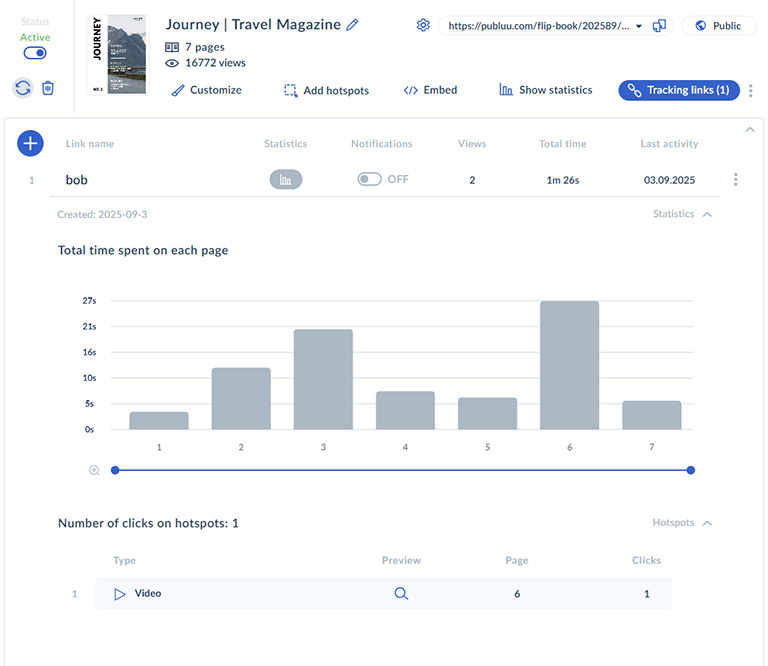
Sending your sponsorship proposal as an interactive Publuu flipbook gives you a real advantage - you can monitor exactly what happens after it’s delivered. Thanks to built-in detailed analytics, you can see when your proposal was opened, how long readers spent on each page, and whether they clicked on links or watched embedded videos. You can also create a unique tracking link to measure engagement more precisely and follow up with clear insights - for example, asking about the package that received the most attention.
🎯 Armed with this data, your next steps will be smarter, more personal, and far more effective.
Types of sponsorship proposals
-
- Event Sponsorship Proposals
For one-time events like festivals, charity runs, or galas. Highlight attendance, audience profile, and brand visibility.
Example: A city jazz festival proposal would stress 10,000 music fans and strong media coverage.
- Program Sponsorship Proposals
Best for ongoing projects - think a youth volleyball league or a year‑long mentoring program. Here, the main selling point is long‑term exposure and deeper connections with the audience over time.
Example: A proposal for a year-long after-school tutoring program would highlight weekly interaction with 100 students and their families.
- Media Sponsorship Proposals
Ideal for content creators - podcasters, YouTubers, or bloggers. Focus on audience size, engagement, and brand alignment.
Example: A cooking podcast includes downloads and listener demographics.
- Athlete or Team Sponsorship Proposals
For athletes or teams. Showcase achievements, competition schedule, and media or social reach.
Example: A proposal from a competitive swimmer might include a competition schedule, social media following, and past media coverage.
- Event Sponsorship Proposals
Effective sponsorship proposal examples
This museum sponsorship flipbook shows how an interactive format can be far more engaging than a static PDF. It features large, high-quality photos and clickable sections that guide readers smoothly through the content. The structure is straightforward, presenting fundraising goals and sponsorship tiers clearly. Its clean, professional design reinforces the museum’s importance in the local community.
Publuu’s online proposal example
This talent competition sponsorship proposal captures the event’s energy with a colorful, dynamic layout. It clearly outlines the competition, audience details, and a variety of partnership options to match different sponsor needs. A clever addition is the built-in contract form, allowing sponsors to confirm participation instantly without a separate file.
Publuu’s online proposal example
This example shows us a high school sports game in Texas - note how you don't need elaborate visuals to build a clear and simple proposal. It clearly states the event’s purpose, the specific time and place, and its connection to local values.
Publuu’s online proposal example
How to improve the success rate of your sponsorship proposals?
To optimize your sponsorship proposal and increase your chances of a ‘yes’, follow these key tips:
- Build relationships first. Sponsors prefer people they know and trust. Connect on LinkedIn, network, or ask for an introduction before sending a proposal.
- Start small, dream big. For first-time sponsors, suggest an entry-level package. Once you prove results, you can aim higher next year.
- Always follow up. If there’s no reply within a week, send a polite reminder or make a quick call. One or two follow-ups are enough.
- Track your outreach. Keep a simple spreadsheet of contacts, dates, and responses to spot patterns and refine your approach.
- Deliver more than promised. Share updates, send a post-event report with results and photos, and thank sponsors publicly and privately.
- Learn from "No". Ask for feedback - it’s free advice that helps improve future proposals.
- Use templates wisely. A master template saves time, but always personalize key sections for each sponsor.
- Mind the timing. Many companies set budgets in the fall. Plan your requests around their decision cycles.
Sponsorship proposal templates
This design works perfectly for newsletters or flipbooks. The version displayed here is static, while the animated version can be viewed through the link below.
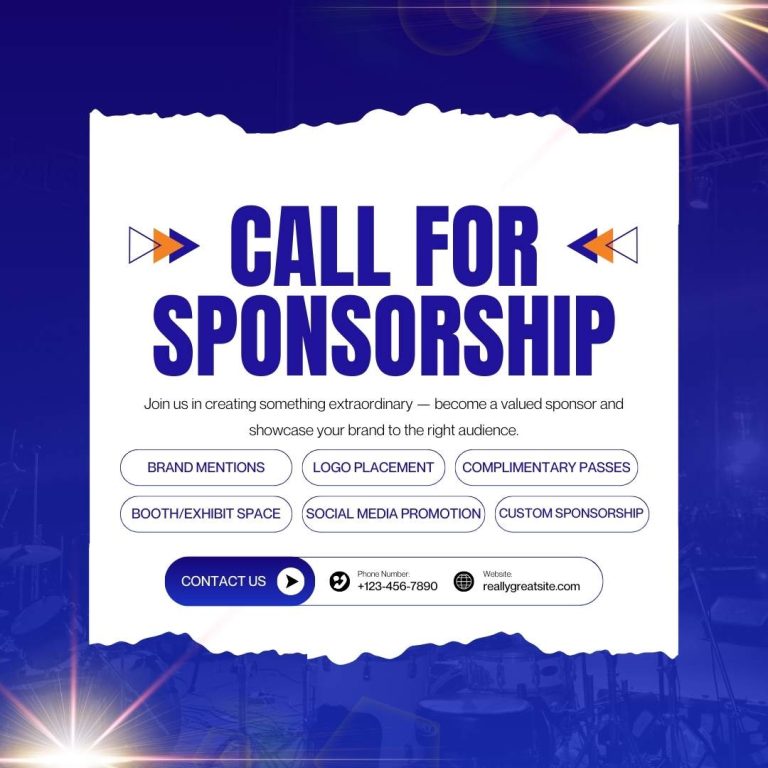
Uses warm browns and yellows that suit nearly any industry. Displayed here in a static format, with animated slides available through the link below.

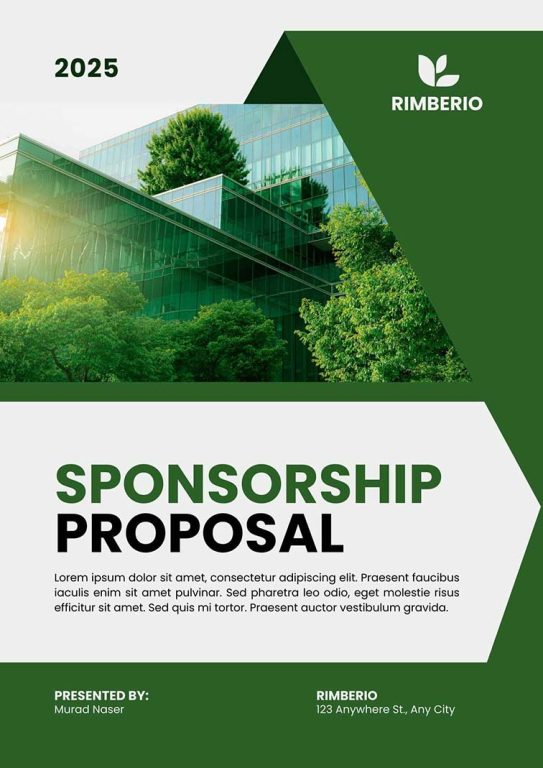
Perfect for projects in health, wellness, sustainability, or anything that feels “fresh and natural”.
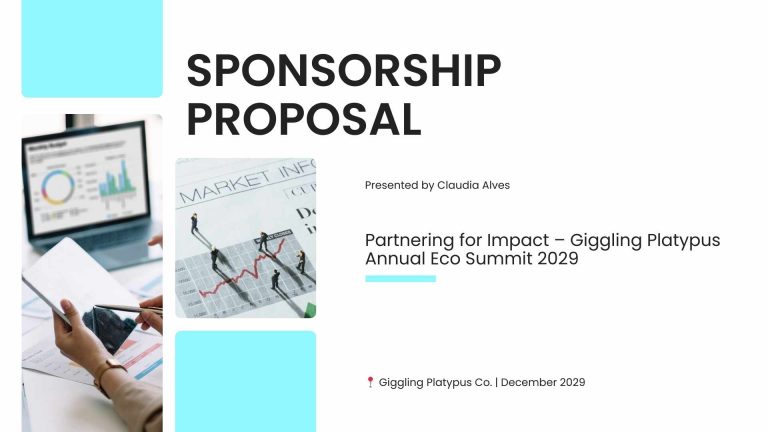
Bright teal tones that make audience stats and charts pop - ideal if you’re showing off detailed performance data.
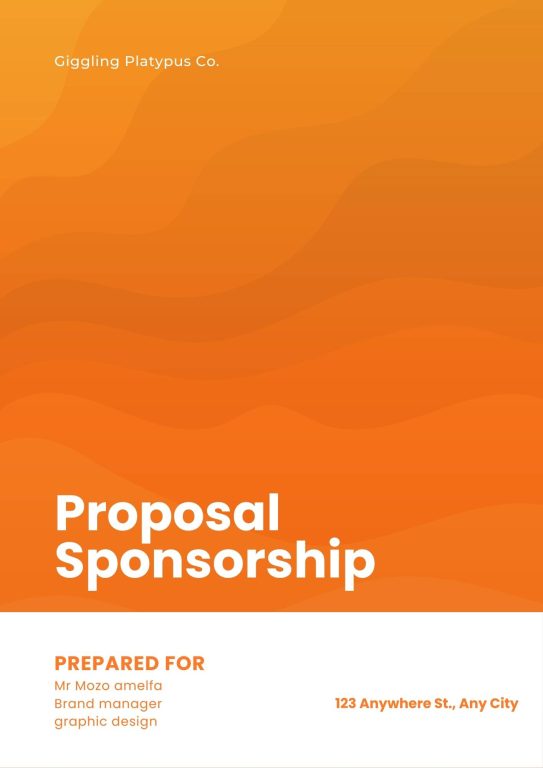
Designed for focus - orange and white create a clean but energetic feel, easily adaptable for any industry.
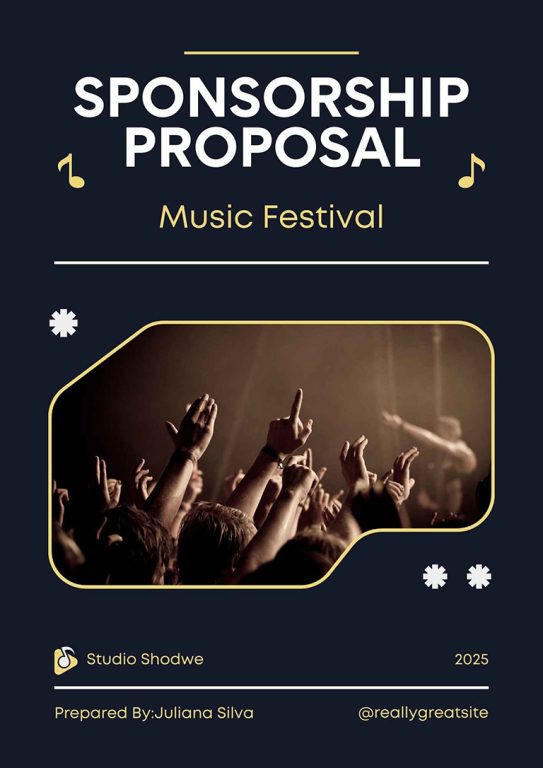
Bursting with color and movement-made for music festivals or lively, high‑energy events.
Sponsorship proposal FAQ
How do I ask for a sponsorship?
Start with research on target companies whose values match your event or project. Reach out with a short, friendly email introducing yourself and asking if they’d like more details on sponsorship opportunities. If they show interest, then send your full proposal. Always personalize your message and explain why they’re a great fit and how the partnership benefits them.
Who typically writes a sponsorship proposal?
For small events or local teams, it’s often the organizer, team manager, or a volunteer. Larger organizations may have a sponsorship or partnership manager, while some hire freelance grant writers or marketing consultants to prepare proposals.
What’s the best sponsorship proposal design?
The best proposals are clean, professional, and easy to scan. Use clear headlines, short paragraphs, and strong visuals to tell your story. An interactive format like an online flipbook can make your proposal stand out and capture attention.
Conclusion on sponsorship proposal
A good sponsorship proposal isn’t just about your event - it shows potential partners you understand their needs and can deliver real value. Know your audience, present your offer clearly and professionally. Make it easy for them to say yes.
You may be also interested in:
What is a financial plan and how to create one (9 steps and tips)
Business proposals – complete guide