How to increase traffic to your website: 10 proven ways
Let's be honest - everyone calls a website a "digital business card", but for many business owners, it's not always clear what it's really doing for them. The truth is, website traffic isn't just another number in your dashboard. It's what helps people discover your brand, brings in potential customers, and creates real business opportunities. Without traffic, even the best website just sits there unnoticed.
In this article, you'll learn how to effectively attract users, whether by using smart SEO strategies, social media tactics and engaging content formats like online flip books. Read on to learn how to boost your website traffic.
Understanding website traffic and why it matters
Website traffic is the number of users showing up at your website, browsing your pages, and interacting with your content. It's the fuel for your online business.
It should be simple to say why it matters. The more people stopping by, the more chances you have to turn them into loyal subscribers, fans or paying customers. Any rise in site traffic sends a clear signal to search engines: users are engaging with your content and Google sees that your site is a valuable source of information.
Types of website traffic
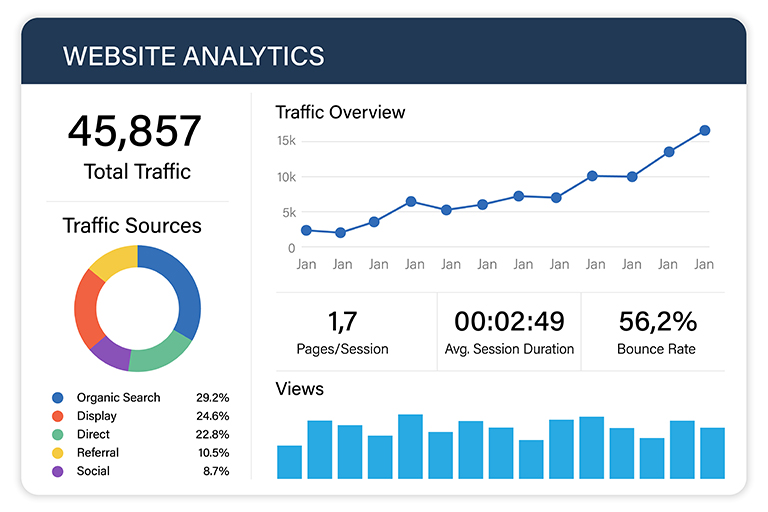
Before you start taking action, you need to know where your traffic is coming from. Let's take a look at the key categories.
✔️ Organic traffic: Users who find you through a search engine (like Google). Search engine traffic is the "Holy Grail" of marketing, and you build it through your solid SEO (Search Engine Optimization) and content marketing strategy. You want people to find you easily.
✔️ Direct traffic: People typing your URL straight into their browser or using bookmarks. This is incredibly valuable - it shows your brand is recognizable and your site (like your blog) is treated as a go-to resource. It shows strong branding and user loyalty.
✔️ Referral traffic: Visits from links on other websites. For Google this is proof that your content is good enough that others want to vouch for it, basically, also very useful in SEO.
✔️ Social media traffic: Users coming from Facebook, Instagram, LinkedIn or X (Twitter). It's often intense but short-lived - especially important in industries like media, gaming or lifestyle.
✔️ Paid traffic: Website visitors you get through Google Ads campaigns or social media ads. Here you have direct control over the scale of visits.
✔️ Email traffic: Subscribers clicking links in your newsletters. This is usually your warmest group, since they're already further along in your sales funnel.
10 effective ways to increase traffic to your website
Now that you know what website traffic is and the main types behind it, let's move on to what really matters - how to increase it. Here are, in our opinion, 10 most effective ways to bring more visitors to your site and grow your audience.
Add interactive content to your website
Interactivity is one of the most effective ways to keep users on your site. People love infographics, quizzes and calculators, but the real game-changer are flipbooks.
We've all been there: you click a PDF link and it loads slowly or requires a download. An online flipbook lets you browse a document right in the browser, and looks like a real publication. You can embed videos, clickable hotspots linking to reviews, or photo galleries, making the content more engaging and easier to explore. As a result, users spend more time on your site and are more likely to share your content online. Here’s a quick example of how Publuu's interactive flipbook can look in practice:
Publuu’s interactive flipbook example
Write high-quality blog content
Think about it: why do you visit your favorite websites? Most of us keep coming back to creators who simply know their stuff. Building authority is key. That's it. If you run, say, a gaming blog, write for gamers, not for algorithms. Share real experience. Skip the "slop" (you know, that mass-produced filler content nobody actually reads). Write what you know - and if you don't know it yet, do the homework. Authenticity wins every time.
Target long-tail keywords
Trying to rank for "investment tips"? It's an extremely competitive keyword with the giants who've been throwing millions at that for years. Instead, zoom in. Think specific, longer queries your actual audience is Googling. These long-tail keywords have way less competition and much higher intent. Don't stress about awkwardly stuffing "investment tips for single moms" into a sentence - just write a genuinely useful guide for single parents. Natural always beats forced.

Create posts people actually want to share, like short clips, memes, punchy graphics. A lot of users discover content through Google image search these days, so meet them where they are. Remember to drop your logo on everything, though. When something goes viral, you want people to know it came from you.
Repurpose content across different platforms
You don't have to reinvent the wheel every single time. One solid blog post can become a podcast episode, a LinkedIn carousel, a series of tweets, or even an interactive flipbook. I've seen creators bundle a bunch of related posts into a full ebook. Work smarter, not harder - squeeze every drop of value from what you've already made.
Use email marketing to bring visitors back
Your email list is one of the few channels you actually can control. Send newsletters, personalized recommendations, exclusive content - but keep it high quality. Nobody wants another "You won't BELIEVE what AI thinks about ancient Egypt" email cluttering their inbox. Give your subscribers something worth clicking, and they'll keep coming back - reviews, discounts, exclusive podcasts.
Collaborate with other brands and creators

Partner giveaways, co-branded campaigns, guest appearances - all are good for a developing company. And here's something I've noticed when working in the fashion industry: the biggest influencers are often booked solid and tend to be pricey.
Meanwhile, micro-influencers tend to be way more engaged, with tighter, more loyal communities. Sometimes a barter deal or product samples to a blogger with modest following can deliver better ROI than an expensive "big name" campaign.
Publish guest posts on relevant websites
This one's a classic win-win. You write a quality article for an authoritative site in your niche - you reach their audience and grab a juicy backlink. They get free, well-researched content. Many bloggers need consistent, high-quality content to maintain their publishing schedule; a ready-to-publish piece from you is a gift.
Keep things consistent
Chaos kills trust. If your visuals swing from minimalist photography to loud vector art with no rhyme or reason, people get confused. Same goes for your tone - if you've built a chill, conversational brand voice, don't randomly switch to corporate-speak. Consistency in look and feel is what makes a brand stick.
Update and improve existing content
Stop chasing new topics for a sec and go back through your archives. That happens all the time - if you have the "best phones of spring 2020" post, all you gotta do is to refresh it to "2026", throw in new stats, swap out outdated screenshots, tighten the formatting - and suddenly search engines treat it like a brand new piece. An updated date plus current data can rocket an old article right back to the top.
Why interactive content is the future of web traffic?
In 2026 search algorithms are getting smarter: backlinks still matter, but they don't carry the weight they used to unless there's genuine user engagement behind them. Google cares about what people do on your site now. How long they stick around. Whether they actually interact with anything.
This is where interactive content becomes a key factor in building sustained traffic. It's not about the reader being a passive consumer of text. It's about making them feel like a participant in the process.
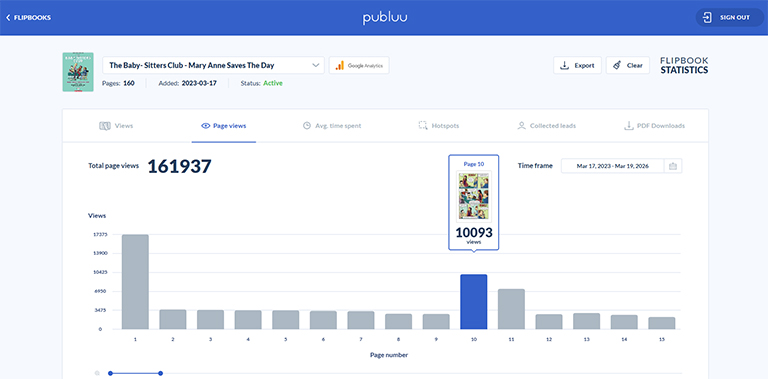
Tools like Publuu take it a step further. They go beyond just making digital flipbooks - they give you behavioral analytics too. You can see which pages people spend the most time on, where they click, and which elements perform best. That's something static content simply can't offer. You can also collect leads directly through your content. And because it can be optimized for SEO and indexed by search engines, more creators are choosing this format.
How to measure traffic on your website?
None of this matters if you're not tracking results. If you're getting serious, get comfortable with Google Analytics (GA4) and Google Search Console.
Key metrics to keep an eye on:
⭐ Total sessions: How many visits your site is getting.
⭐ Unique users: How many different people are showing up, outside bots and various IPs.
⭐ Bounce rate: The percentage who land on your page and immediately leave. If you got high bounce rate, your content might not be the best around.
⭐ Average session duration: The longer the better. It means people are engaged and more likely to convert.
⭐ Traffic sources: Where are visitors finding you - Google, Facebook, your newsletter?
⭐ Conversions: The big one. How many visitors actually do the thing - sign up, buy, download, whatever your goal is.
👉 Did you know? You can integrate your flipbooks with Google Analytics. Learn how to set it up in our guide.
Level up with pro tools
GA4 alone won't give you the full picture. If you want to see what the competition is up to and which keywords are worth targeting, tools like SEMrush or Ahrefs are essential. They let you track rankings, spy on backlink profiles, and figure out where the leaders in your industry are pulling traffic from.
Let data drive the decisions
Get into the habit of regularly reviewing your numbers. Focus on what's working, learn from what's not. And for documents and PDFs, which are normally a total analytics blind spot, solutions like Publuu's tracking features give you real visibility into how people interact with your files.
Final thoughts on increasing website traffic
Growing your website traffic doesn't have to be complicated. However, it's probably the most important metrics you should be watching, as it matters even more than conversions.
One of the smartest moves you can make is to focus on interactive content. Publuu flipbooks aren't just good for pulling in new visitors - they're also incredibly useful for understanding what actually resonates with your audience.
FAQ about website traffic
How long does it take to increase website traffic?
It really depends on your SEO and methods you're using. Some methods, like paid ads or social media promotion can cause rapid spikes... that can turn out to be pretty short-lived. You actually want to build organic traffic which requires more effort - but it's worth updating old content that can cause visible changes.
Is organic traffic better than paid traffic?
Organic traffic is generally considered the most valuable type of traffic. When people find you naturally through a search engine, it builds long-term authority and you aren't paying for every single click. That said, paid traffic isn't "worse" - it's just different, especially if you want results fast.
Can I increase traffic for free?
Absolutely. Most of the strategies in this guide don't require any budget - writing solid blog posts, optimizing for long-tail keywords, promoting on social media, guest posting on other sites, updating old content, and adding interactive elements like flipbooks. It takes time and effort instead of money, but it's totally possible.
You may be also interested:
Optimizing your flipbook for SEO
Effective ways to reach your target audience in 2026
How to increase online sales – tricks and tips