What is engaging content and how to create it effectively
Let me tell you something: most content published online these days disappears without a trace. Not because it’s bad and useless, but we scroll past it without really noticing it. If something isn’t interesting, it gets ignored. If you want people to read, you have to create content that truly pulls them in.
Focus on creating engaging content that is actually worth quoting and passing along. In this article you’ll see how different formats, including tools like a flip book creator, can turn boring documents into something people actually want to flip through.
What does engaging content actually mean?
It’s easy to define "engaging" by counting likes and shares. But that’s a quick shortcut, because you can't think of customers just in terms of numbers, as we all should know. Engaging content is anything - a blog post, video, podcast episode, meme - that holds someone’s attention and makes them want to keep going.
So, why aren’t all of these metrics out there? Because no number fully captures "engagement". Someone might listen to a podcast three times and never leave a comment. Someone else might print an article and pin it by the office door.
Yes, time on page, scroll depth, and click-through rate matter, but they don’t tell the whole story. If people come back, if they bring up your work in conversations, if they send it to friends - that’s engagement, even if your dashboard doesn’t show it. Take a look at the example below - a piece of engaging content presented as a digital flipbook.
Publuu’s online flipbook example
Why engaging content matters for brands and marketers?
Publishing content alone isn’t enough anymore. Anyone can write something, and it only takes a few clicks to generate a podcast episode. A brand wins with engagement when it can spark emotion, solve people's problems and present information in a way that’s worth someone’s limited time.
- Higher conversions - engaging content can generate much more conversions than static content (Demand Gen Report).
- More time spent - users spend 53% more time with interactive materials than with plain text (Content Marketing Institute).
- Stronger SEO signals - longer sessions and lower bounce rates tell Google your page deserves a higher ranking.
- Better customer data - every click in a quiz, calculator, or interactive flipbook tells you what your audience cares about.
What makes content truly engaging?
Engagement isn’t about clicks or views. It’s about content that truly engages the reader. Someone reads it and thinks: "That was worth my time". We're conditioned to think of it in terms of metrics, because metrics are easy to track. But the truth is, engagement is an emotion, like everything in marketing.
A post with few likes but a comment section full of thoughtful replies can do more for your brand than a viral hit nobody remembers a week later. Here are some reasons that can make your content truly engaging.
Interactivity and user control
Good content gives readers choices - instead of forcing one straight path and endless scrolling, it lets people decide what to look at and explore at their own pace. For some creators, a clean PDF layout with clear sections may seem like enough. However, static documents can limit how people interact with the content.
Interactive formats solve this problem. They allow readers to smoothly move between sections, explore photo galleries, and watch videos without leaving the document. The key is making people feel like they’re navigating - not being dragged along.
Make interaction meaningful
If your interactive element is just a trick like a quiz that asks three pointless questions and then demands an email - people will see through it immediately. Interaction should add real actual added value: a calculation they actual need, a result that teaches them something, a tool they’ll bookmark. The moment it feels like a lead-generation tactic, trust drops.
Emotion and storytelling

When you describe how someone solved a real problem, the reader puts themselves in their shoes. They stop processing your content as "information" and start experiencing it as a story, thinking "hey, this could work for me". That emotional connection is what makes a brand stick in someone’s mind weeks later.
Visuals and multimedia
Most people process visual information faster and more naturally than text. It may sound obvious, but honestly, content performs better when it’s visual. These days, hardly anyone wants to read.
Types of engaging content that work today
Here are formats that get people to join in, with real examples to illustrate them.
Quizzes and personality tests
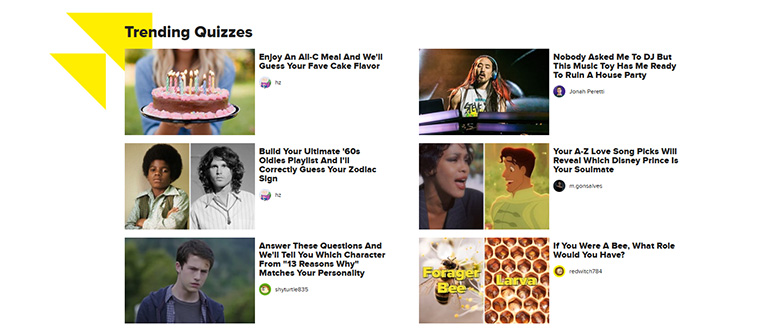
Example: BuzzFeed Quizzes - simple, super shareable, and copied a million times for a reason.
They help people learn something about themselves, which sparks curiosity and makes them want to share the result. Let's be honest: people love to label themselves. Even a simple "Which character are you?" quiz works. People send it to friends and compare answers. That's how things can turn viral.
Digital flipbooks and interactive magazines
Publuu’s online flipbook example
Example: Publuu's HTML5 magazine above contains audio elements, interactive hotspots and draws reader's attention, mixing the best of print with the power of the web.
If you have content like a company catalog, media kit or product brochure - turning it into a digital flipbook can make it far more engaging. Instead of scrolling through a long PDF, readers can flip through pages, open media elements, and move between sections more naturally.
Calculators and online tools
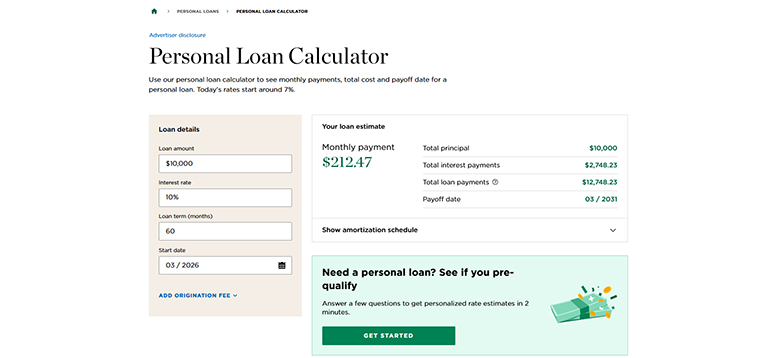
Example: NerdWallet loan calculator - users plug in their info and get useful answers right away.
These solve a specific problem on the spot and give a personalized result. Instead of reading generic advice, users see numbers that match their situation. That builds trust and keeps people on your site longer. A loan calculator, calorie counter, or ROI estimator delivers instant, practical value you can get behind. The user adds this page to his bookmarks - which might not show up in the metrics, but proves engagement.
Polls and instant surveys
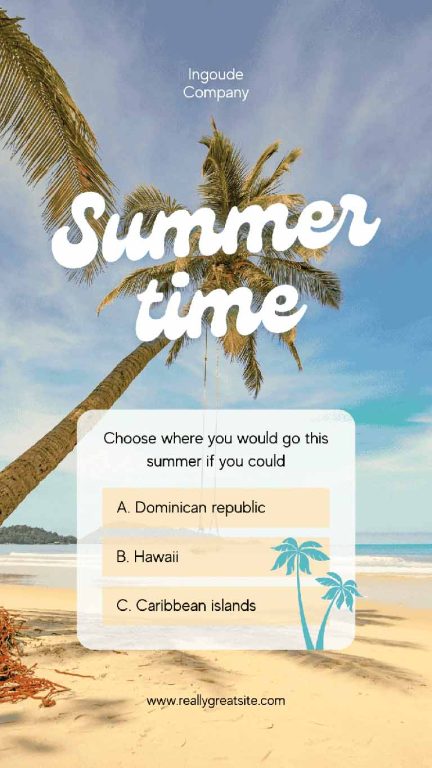
Example: Instagram stories polls - one tap to vote, instant results.
People love sharing opinions when it takes five seconds, not five minutes. Short polls create a sense of community and give brands real-time feedback. Stick to a few questions - one open-ended question at most. Keep it short and sweet.
Gamification
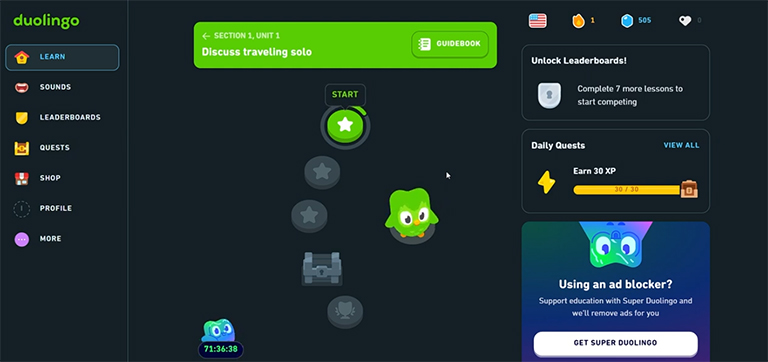
Example: Duolingo - streaks, XP, and leaderboards turn language learning into a daily habit.
This means using game mechanics - points, badges, progress bars, leaderboards - in non-game situations. It taps into our natural urge to compete, collect, and finish what we started. Duolingo uses daily streaks, experience points, and ranking systems to motivate users to keep learning and return to the app regularly.
Interactive infographics and maps

Example: Earth Nullschool - the interactive global wind map, where users can explore real-time wind patterns by moving the globe and zooming into specific regions.
These let users click, hover, and explore data at their own pace instead of staring at a frozen chart. One person can skim the overview; another can dig into every data point. The educational value makes them highly shareable - especially with journalists and industry sites. There’s something in it for everyone.
Flipbooks and digital publications as high-engagement formats
Flipbooks aren’t just PDF makeovers. They blend print-style design with HTML features in a way most other formats can’t easily match.
The psychology of turning pages
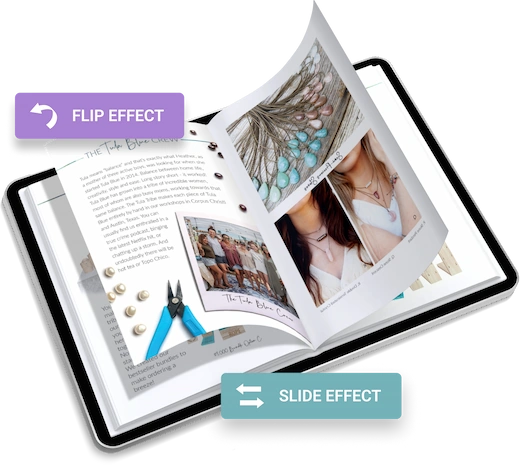
The page-flip motion feels hands-on. Readers always know where they are: at the beginning, in the middle, or near the end. This reduces the mental fatigue that comes from endless feeds. That familiar reading flow feels closer to browsing a printed magazine or book - but with the convenience of digital access. No endless scrolling.
Built-in multimedia
A flipbook is a real HTML-based publication, which means it can include far more than text and images. You can embed a YouTube video right on the page instead of sending people off-site, so that it feels like an animated illustration. You can turn a product photo into a clickable hotspot with additional details. Subtle animations and audio elements can make the experience feel more dynamic and engaging.
Control over distribution
Once you email a PDF, it’s out in the wild - you dont know whether it's passed forward, shared, showed to others. Flipbooks let you choose who sees what. You can password-protect access for newsletter subscribers, disable downloading and printing to protect your work and even set an expiration date so a seasonal catalog doesn’t float around the internet forever.
Analytics that actually tell you something
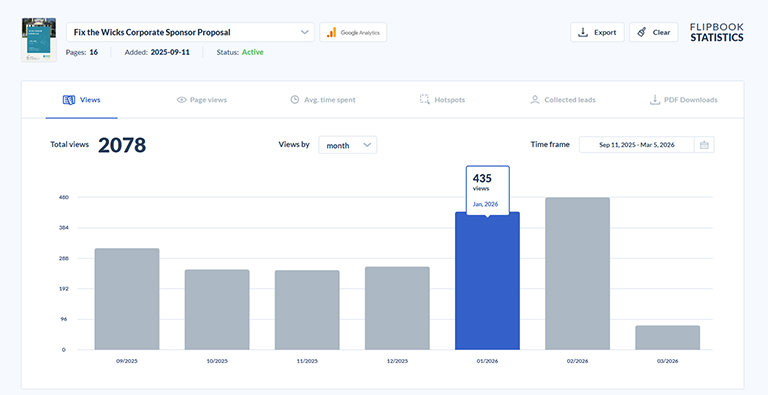
Analytics show which pages held attention and which ones got skipped. You can even get real-time alerts when a specific person opens your document. If your top prospect is reviewing your proposal at 2:00 PM, you know it might be a good time to follow up shortly after.
Visual polish on every device
Flipbooks are fully responsive, so a carefully designed catalog adapts well to different screen sizes, from phones to desktop monitors. You don't need external apps to use the multimedia function or copy text - a modern browser is enough.
How to create engaging content?
Creating good content isn’t just writing - it’s designing an experience. Here’s a practical path from idea to distribution.
1. Define your goal
Before you do anything, answer one question: What do I want this to achieve? Your answer should fit in one sentence and describe either an emotion or an action.
For example: "I want potential customers to join my email list before we launch a new product".
2. Understand your audience (persona)
Marketing comes down to one thing: solving a problem or meeting a need. Find out what your audience truly struggles with. If your readers enjoy a good story, don’t start with complex rules or statistics. Start with rich art and narrative descriptions that let them feel the game before they buy it.
3. Match the format to the goal
Not every format is suitable for every stage of the customer journey:
⭐ Lead generation? → interactive quiz (e.g. "What character class should you play?").
⭐ Product presentation / sales? → a guide flipbook (e.g., a guide to the game world styled like an old book).
⭐ Building authority? → interactive infographic with world statistics or a technology tree.
4. Storytelling + interaction
The format is the packaging. The story is the product. Don’t just list features - paint a scene. Instead of explaining the rules of your board game, describe a playtest where one dice roll changed the whole campaign.
Then consider adding interactive elements: clickable maps, hidden details, behind-the-scenes video. Hook them with the story, then give them buttons to explore.
5. Design the user experience (UX)

Even the best story falls flat if it's painful to read. Watch your margins, line spacing, font size, and contrast. If you’re building a flipbook, start with a solid PDF template (see how to create one using Canva and Publuu). It saves time and keeps the final result looking polished.
6. Don’t forget SEO
Content nobody can find might as well not exist. Use natural phrases in titles, headings, and image descriptions. Make sure your content can be properly indexed by search engines, so it actually shows up when people look for it. If Google can’t see it, it didn’t happen.
7. Distribution
Publication is only half the battle. Now you need to invite people to the premiere.
Share the link on LinkedIn and Facebook groups. Send a personalized mailing to your database. Add a teaser to Instagram or TikTok, linking to the full version of the content - whether it’s an article, interactive guide, or digital publication.
Spend as much time on promotion as you did on creation.
How to measure content engagement?
Not every metric matters the same. Focus on the ones that show whether your content actually lands with the right people.
⏱ Time on page: If visitors stay for 2-3 minutes or more, they’re reading - not just skimming and scrolling. Under 30 seconds usually means something’s off. The question is: what’s making them bounce?
📜 Scroll depth: Did readers make it to the important stuff near the bottom? In my opinion, 50–70% scroll depth is a solid result. If most people drop off around 20%, your intro isn’t grabbing them.
💬 Engagement rate: What percentage of visitors interacted with the page? Over 60% often means your traffic source and your content are a good match - right message, right crowd.
🔗 Social shares: This is one of the strongest signals of approval. Don’t only count how many shares you get - watch who shares it. A share from a respected name in your industry can be worth more than dozens of random reposts.
🖱 Heatmaps (e.g., Hotjar): These allow you to see where the users click (even if there is no link there) and where they hover their cursor. This is a great way to see the "dead zones" of your website.
📊 Page views: Looks impressive in the report, but it's a so-called vanity metric. If 10,000 people saw your content but no one stayed on it for more than 10 seconds, your content isn't working. Look for quality, not just quantity.
Common mistakes that reduce engagement

Even the best content will fail if you fall into one of these traps. Here's what to avoid:
The narcissist approach
The most common mistake - creating content that excites you or your boss, but has nothing to do with what your audience actually cares about. Before you build anything, check what people are asking on Google, Reddit, or industry forums. Your content should answer a question someone is already asking - not be a long speech about how amazing your product is. It’s not about you.
Buffet syndrome
You want to impress, so you add a quiz, three videos, a calculator, and an interactive guide into one article. As a result, people feel overwhelmed and close the tab. One piece of content should serve one main goal, with one primary interactive element. Don’t try to boil the ocean.
Aggressive interaction
Nothing drives people away faster than a newsletter pop-up two seconds after the page loads, stacked on top of a cookie banner and a chatbot. Give readers a chance to actually engage with your content first. If you must use a pop-up, trigger it halfway down the page or on exit intent - not the moment they arrive. Don't slam the door in their face.
Invisible content
If your text is baked into an image or locked inside a file format search engines can’t read, Google sees it as empty space. Make sure your content is accessible to search engines and can be properly indexed. If it can't be found, it can't win.
Asking for too much, too soon
You offer a free ebook, but the download form asks for a name, phone number, company, job title, and more. Every extra field costs you conversions. Often an email address is enough to start the relationship. Ask for more later, after you’ve delivered real value. Don’t put the cart before the horse.
Final thoughts: engagement is about connection, not just metrics
Engagement isn't just about more views. It's about meaning. If your content makes people stop, think, feel something, or take the next step, it’s working. Metrics help you spot patterns, but they’re not the whole story.
The real win is when people come back, talk about it, save it, share it, or act on it. Even if the dashboard doesn’t show the raw numbers.
FAQ about engaging content
What makes content engaging?
Engaging content is both useful and relevant to the audience. It helps readers solve a problem, learn something new, or better understand a topic. Clear structure, storytelling, and relevant visuals can also help capture and maintain attention.
What is an example of engaging content?
Good examples often invite readers to interact with the material or provide personalized insights. For example, quizzes such as "Which plan is right for you?" or tools like calculators can help users quickly find answers that match their situation.
How can interactive content improve engagement?
It encourages users to participate instead of only reading or watching. Elements such as quizzes, polls, or calculators allow readers to explore options and receive personalized results, which can increase attention and time spent on the page.
Does engaging content improve SEO?
Yes. Engaging content can support SEO by encouraging visitors to stay longer on a page and interact with the material. It may also lead to more shares and backlinks from other websites, which can improve visibility in search results.
You may be also interested:
Engaging educational content – 2026 guide
20 Examples of magazine topics to create engaging content
What is branded content? Definition, examples, and how it works