Business Playbook Guide: Definition, Examples and Best Practices
Many founders believe they don’t need a business playbook because everything about their company’s processes already lives in their head. For a three-person team, that might work - until the same questions start appearing every day. Every growing company eventually runs into this problem. Informal communication and quick Slack messages stop being enough to keep everyone aligned. Knowledge gets scattered, mistakes start to appear, and employees struggle to find clear answers.
In this guide we'll explain how to build one properly, what works, what doesn't, and how to publish it as an online flip book your team will actually use.
What is a business playbook?
A business playbook is the core worker-facing document that presents your company's key strategies, processes, and operating rules. Think of it as the place employees turn to when they want to understand "how things are done around here" - from starting a task, to documenting their work, to handling everyday responsibilities.
It is not just a collection of standard operating procedures (SOP). It cuts onboarding time in half: every new hire shows up on day one and can already check in the book what good work looks like. It also keeps everyone on the same page, so the work doesn’t start drifting in different directions across teams. Anyone on your team, anywhere in the world, is expected to deliver work to the same standard.
Here’s an example of what a real business playbook can look like in practice:
Publuu’s business playbook example
Why companies use business playbooks?
Faster onboarding
Big corporations hand every new hire an operational playbook on day one. It covers absolutely everything: how you should dress, how to speak to customers, what you can and cannot present. A new employee doesn't have to learn by making mistakes. Instead of figuring things out through trial and error, they receive a clear guide that shows exactly what’s expected from day one.
Consistent operations
Let's say you open a new branch of your agency in a new city. Of course teams in Europe and the US will work differently, adapted to local culture. But a company playbook gives everyone a shared, non-negotiable baseline. Everyone will use the same software, follow the same rules, and know how to communicate with the company's partners.
Knowledge retention
This is the most underrated benefit by far. Over time, experienced employees start jotting down the small tricks and shortcuts they rely on every day - the kind of practical know-how that would otherwise walk out the door with them.
Back when I worked at a sales company there was always that one veteran sales guy who could close big deals while basically leaning back in his chair doing nothing. And sure, he would share his knowledge with us... but let's be honest. A great salesperson should be selling. Not training other people.
Faster decision making
Employees don't have to run every single little thing past the boss. The solution to almost every common, recurring problem is already written down in the corporate playbook. Just like all the other benefits, this saves an enormous amount of time, and lets you explain core rules once clearly, instead of repeating them 100 different times to 100 different people.
Types of business playbooks
Companies create all sorts of playbooks based on their specific needs or roles. Here are the most common ones and what they typically include:
Playbook type | What’s inside? |
Sales playbook | Ideal customer profiles (personas), sales scripts (what to say when), objection handling, proposal and contract templates |
Marketing playbook | Brand identity (visuals, voice, colors), campaign strategy, content calendar, approval workflows, social media guidelines, key marketing metrics |
Operations playbook | Supply chain rules, quality control procedures, maintenance schedules, warehouse workflows, health and safety policies |
Customer service playbook | Customer interaction scripts, complaint procedures, escalation paths, onboarding workflows, support FAQs, communication standards |
Leadership / HR playbook | Recruitment processes, performance review guidelines, career development paths, conflict resolution, feedback frameworks, company policies |
Any of these playbooks can be expanded, combined, or customized to fit specific business needs (for example, a remote work playbook).
What should a business playbook include?
A good playbook must be practical above all. You can start with a welcome message from the CEO or a brief introduction for new hires, but the real value lies in the practical guidance that follows.
Below are the key elements your playbook should include.
1. Company foundations
Your mission, vision, and core values explain why your company does what it does. Explain the reasoning behind your choices. I remember working with banks where even the IT specialists managing servers in the back rooms, people who never saw a client, were still expected to show up in suits every day. The reason was simple: the institution wanted professionalism across the entire organization. Rules like this only make sense when people understand the "why" behind them.
2. Organizational structure
Who does what, and who makes decisions. You can adapt this section per department. Remember, it doesn’t matter if every employee knows who’s on the board of directors - but they absolutely need to know who to turn to when they’re stuck. Create a flexible template that local teams can fill in with their own managers, contacts, and escalation paths.
3. Process documentation
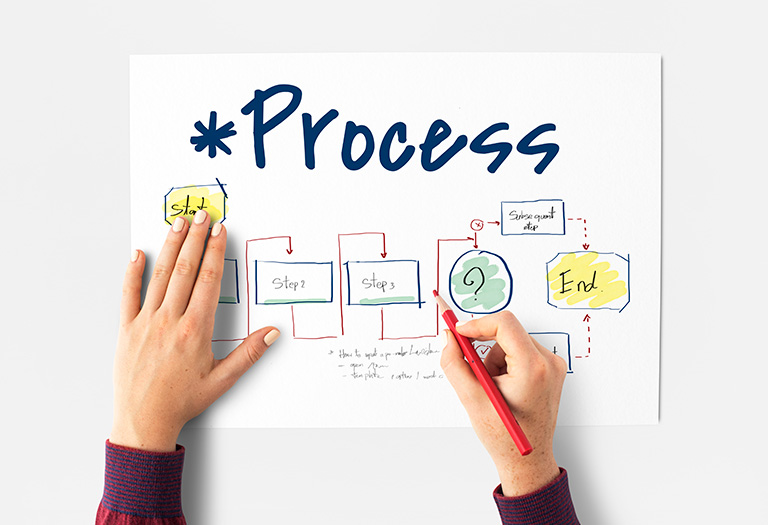
Step-by-step instructions, checklists, and sample documents. If your team uses standard templates, give them access. For instance, provide a contract template with a filled-in example showing how billing works. Legal requirements often demand formal documentation for everything - so better to be prepared than caught off guard.
4. Tools and systems
A clear list of software and platforms your company uses, along with login instructions and access rights. Include troubleshooting tips, best practices, and usage guidelines. Don’t skip the less obvious stuff either - like whether employees can install Spotify on their work computer if music helps them focus. Small details like this prevent constant "Can I...?" questions.
5. Metrics (KPIs)
How you measure success and what counts as a strong performance. This is especially crucial for sales teams, but every role should have clear KPIs. And remember, people perform better when they know exactly how their contribution is evaluated and rewarded.
Business playbook examples
Social media playbook made with Publuu
Publuu’s social media playbook example
This playbook clearly outlines how to use each channel and what to prioritize. Publuu also makes it highly scannable and easy to search.
Canva marketing strategies playbook

A warm, user-friendly design that feels approachable and easy to work with.
Canva corporate playbook

A polished, corporate-oriented playbook option with a cooler, more formal tone.
Canva entrepreneur's playbook

Minimalist and clean, using strong contrast for a simple, modern look.
Canva onboarding and culture playbook
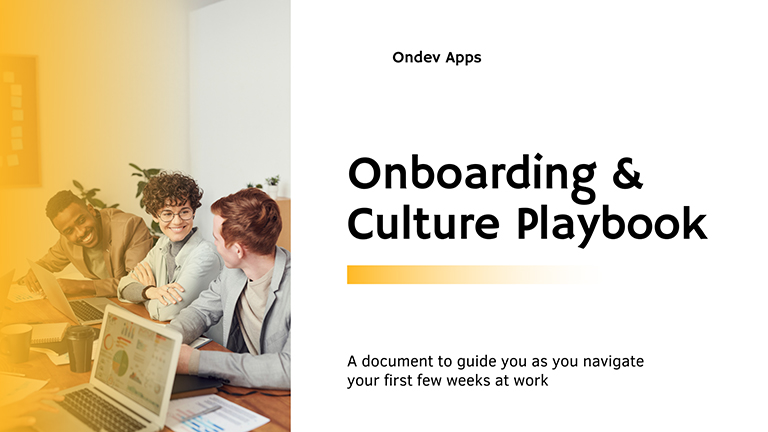
This presentation template can be used to create a very effective onboarding guide thanks to its structured, presentation-friendly layout.
How to create a business playbook?
Ready to create your own business playbook? Follow these steps to build one that your team will actually use.
1. Define the purpose
A playbook designed to onboard new employees will look different from one meant to standardize internal procedures - think what you want to address and why. For example, if your company uses custom-built software, it might be worth including a basic user guide right inside the document.
2. Build your structure
Use the list from the previous section as your starting point. Map out the key areas you need to cover in the PDF brochure:
⭐ Welcome and must-know basics (mission, values, dress code, parking rules, etc.)
⭐ Key people and roles (who decides what, who to contact when you’re stuck)
⭐ Step-by-step processes and checklists
⭐ Tools and systems (access instructions, troubleshooting)
⭐ Templates and sample documents
⭐ KPIs and success metrics
Adapt this structure to your industry - everything from dress code to parking rules. Probably if you hit a wall, bring in experts from relevant departments: HR, IT, Legal, Operations, and listen to what they say.
Look at how processes actually work today and ask yourself: can this be improved? Pay attention to what's not working, what questions new employees keep asking, and what advice you'd give them if you had five minutes. This can be something kind of obvious, like a warning of female employees not to wear high heels on the factory floor.
3. Fill in the content
Your structure gives you the outline - now it's time to build. Expand each section you created before, write things down using clear, simple language. Remember, people think visually today, so add images, diagrams, flowcharts, and screenshots wherever possible. A playbook has to be scannable. Nobody wants to read a wall of text.
4. Test it
Once you have a first draft, put it to the test. I typically give the document to someone totally unfamiliar with a given process and see if they can complete the task without asking questions. If they can't, I revise, rewrite until they finally get it. The goal is to make the guide easy enough for anyone in the company to follow.
5. Publish and distribute
Once the playbook is ready, make sure your team can easily access it. Most companies export the document as a PDF and share it internally, while others also print physical copies for onboarding or training.
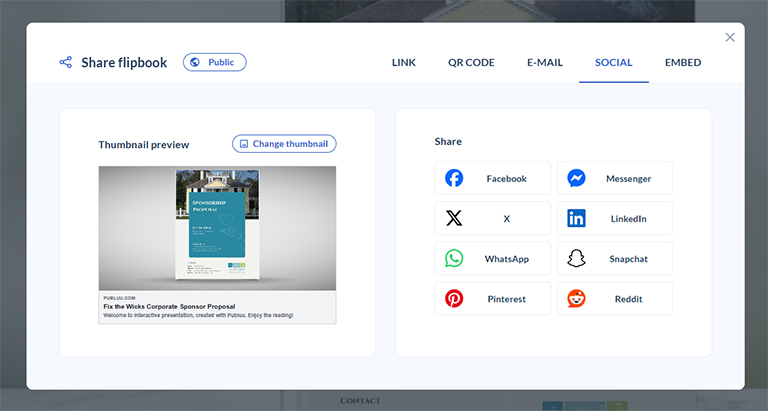
Today, more and more teams publish their playbooks as interactive flipbooks, which allow employees to read the document on any device and quickly navigate between sections. Tools like Publuu make it easy to turn a static PDF into an interactive playbook that is simple to share across the organization.
6. Keep it alive
Your company evolves - so your playbook must too. Assign someone to review and refresh the document at least once a quarter. A playbook that's out of date is worse than no playbook at all.
Even the best playbook won't help if employees rarely open it. The problem is simple: static documents are easy to ignore. If employees can't easily access the document, they simply won't use it.
A better approach is to host the playbook online and share it through a single link. This way everyone always accesses the latest version, without confusion about outdated files or missing attachments. Instead of sending documents back and forth, you can share PDF documents online and keep everything in one place.
Another advantage is visibility. Rather than guessing whether employees have read the document, you can track how people interact with your PDFs and see which pages they open or how long they spend on them. The video below shows how you can track interactions with shared documents.
Business playbook best practices
Even a well-structured playbook can fail if it becomes too complex or difficult to use. The following best practices will help you keep your playbook clear, practical, and easy for your team to follow.
🎯 Be specific: your playbook does not need the company’s full history or branding guidelines. Employees use it to understand how work gets done, who is responsible for what, and how to solve common problems. Focus on practical instructions people can apply immediately.
📊 Use visuals: clear diagrams, process maps, screenshots, or short videos often explain workflows better than paragraphs of text. A playbook should be easy to scan, not a wall of instructions.
⚡ Less is more: do not try to describe every rare edge case. Focus on the 80% of situations people deal with every day. Remember, a new employee does not know your routines yet, so the things that seem obvious to you will not be obvious to them.
🚀 Make it easy to access: the playbook should always be within reach - in the cloud, on the company chat, or as an interactive online flipbook. If people can’t find it quickly, they won’t use it.
Final thoughts on business playbooks
A business playbook isn’t meant to be just another document nobody opens. Done right, it becomes something people actually rely on when they need to check how a process works or make sure they’re doing things the right way. When processes are clearly documented, onboarding becomes easier, knowledge stays inside the company, and employees can make decisions without constantly asking for help.
Investing time in building a playbook today will pay off as your team grows and your operations become more complex. Start documenting what works, organize it into a clear structure, and turn it into a resource your team can rely on every day.
Business playbooks FAQ
What is the purpose of a business playbook?
A business playbook standardises how work gets done across your entire company. It removes "word of mouth" training, speeds up onboarding, aligns your team, and reduces the need for managers to be involved in every small decision.
What is the difference between a playbook and an SOP?
SOPs are individual step by step instructions for one single task. A playbook is the complete system. It brings together all your SOPs, workflow documentation, principles and context, and explains not just what to do, but why you do it that way.
Who should create and maintain a business playbook?
The most useful playbooks usually come from the people who are doing the work every day, because they understand the real process - not just the version that exists on paper. Assign one overall owner who is responsible for updating it quarterly, team members should be able to suggest improvements.
You may be also interested:
Creating employee handbook – best practices
Employee Training Manual – what is it and how to create it?
Interactive guide: types and creation with examples and templates